Chapter One
How A Town Got Invented
In the spring of 1971 there was no Chimoubongo. There was a logging road, a bend in a creek, forty-one hectares of white pine nobody had bothered to cut, and a school bus with the seats torn out.
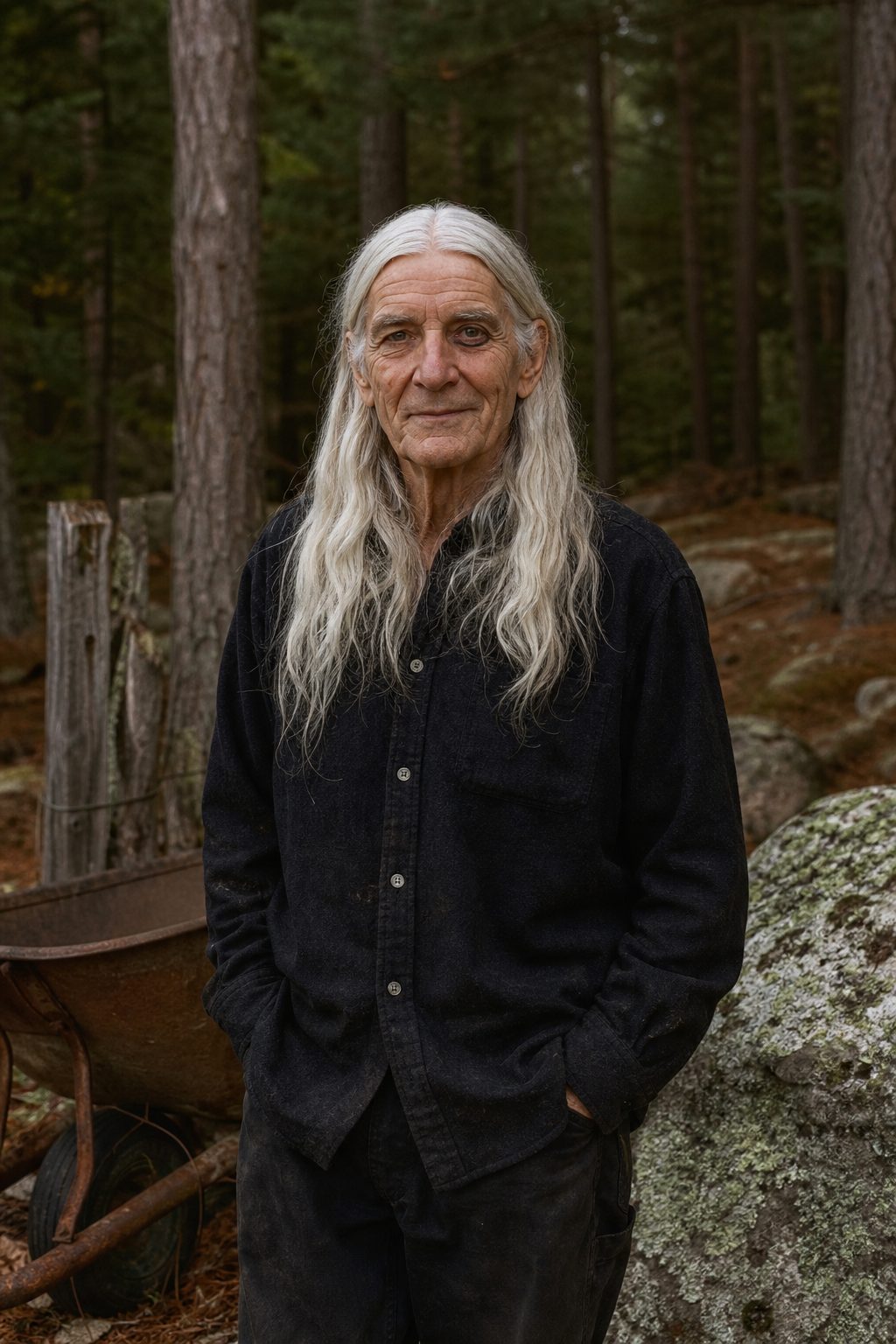
The bus belonged to Alphonse-Réal Bougie, who was thirty-four, from Trois-Rivières, and had been asked to leave four communes in two provinces. Not for anything criminal. People simply found that after a few months in his company they had started keeping a candle lit for reasons they could not articulate.
Eight other people were with him. Their names are on the stone by the post office. There was also the dog, named Motion, because Alphonse-Réal insisted every vote needed one.
“A town is not a place. It is a group of people who have agreed to keep showing up. The trees were already having a town. We just asked to join.”
Alphonse-Réal Bougie, 1971The Vote
On the night of June 2nd, 1971, they held what the charter still calls The Vote. It lasted eleven hours, for two items.
Item one: shall this be a town? Passed, nine to nothing. Motion abstained by falling asleep, which the charter records as a formal abstention and which is why abstaining in Chimoubongo is still called doing a Motion.
Item two: what shall it be called? This took the other ten and a half hours. At around four in the morning Alphonse-Réal said the word Chimoubongo. Nobody asked what it meant. Everybody voted yes. For fifty-five years he has answered the same way: "It means this." And then he gestures at everything.
The town appears on hydro maps and one 1978 tourism brochure, but not on the provincial municipality register. It stopped contesting that and now considers it a feature. The mail comes. That was always the real test.