Come See The Things
Attractions & Monuments
The Bureau was founded in 1984 by Ginette Lemay, who felt the town was being modest to the point of rudeness. What follows is the official register of things worth stopping the car for.
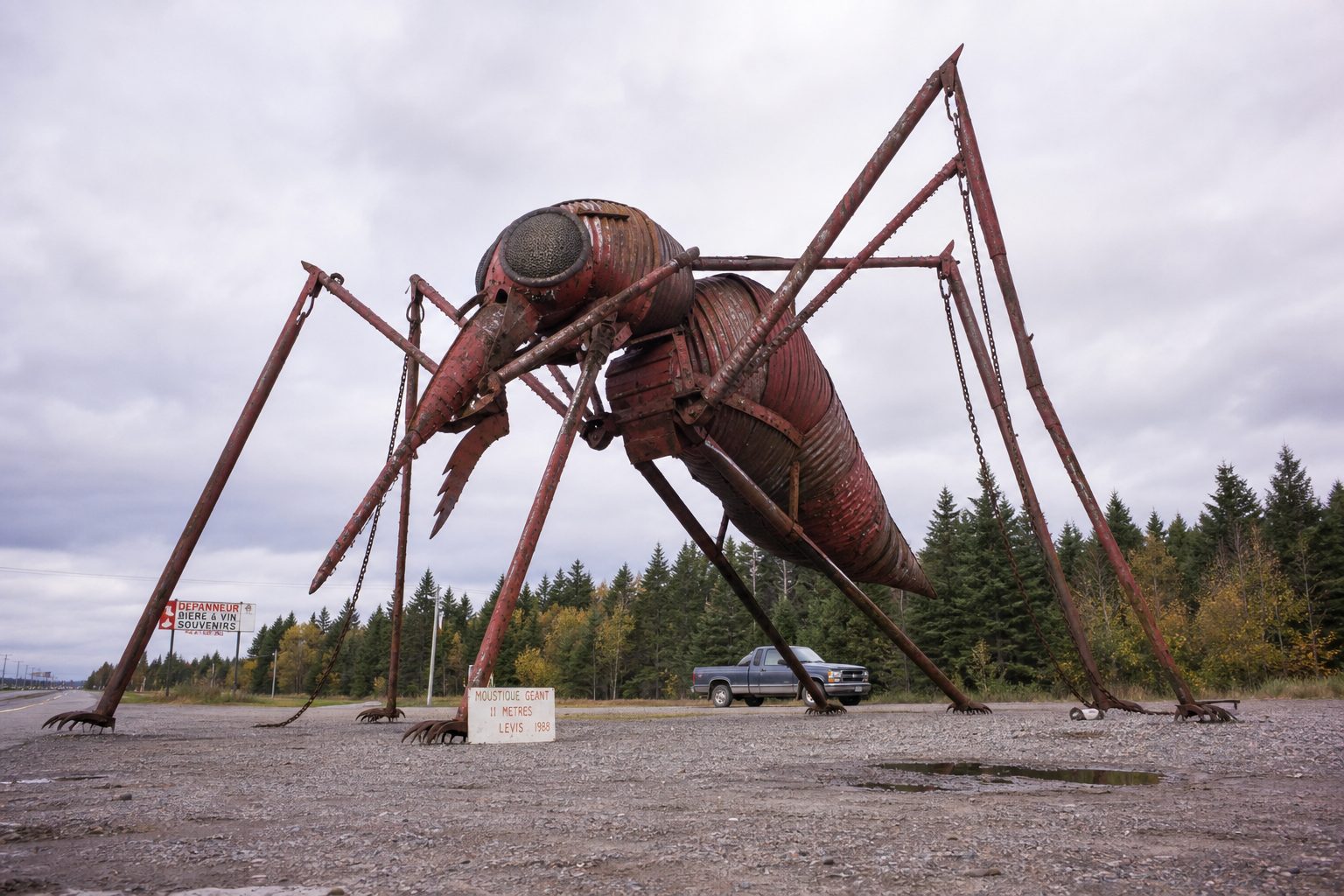
The World's Second-Largest Mosquito
Eleven metres, welded from culvert pipe, farm gate hinges and one entire snowmobile. Erected in 1988 by Big Yvon. It was meant to be the world's largest, but a town in Manitoba had gotten there first and was, unfortunately, bigger.
Chimoubongo declined to extend the statue. The plaque reads: SECOND LARGEST. WE KNOW. WE ARE FINE.
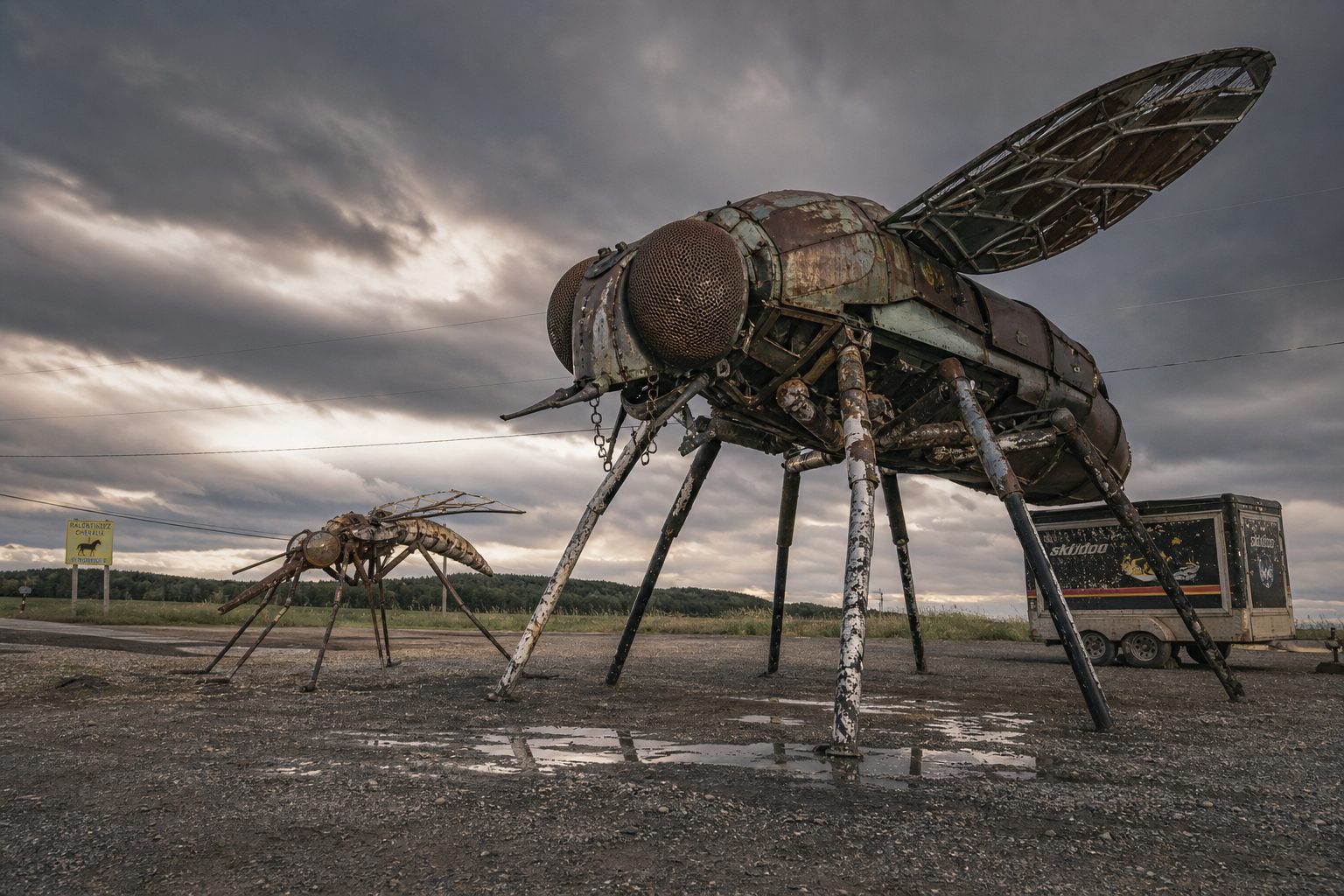
The World's Largest Horsefly
Fourteen metres. Built three years later by Big Yvon's brother Little Yvon, who says only that "the mosquito looked lonely." It is positioned so that between 4 and 6 p.m. in summer its shadow falls entirely across the mosquito.
Both brothers still eat Thursday soup at the same table and have not discussed it in thirty-four years.
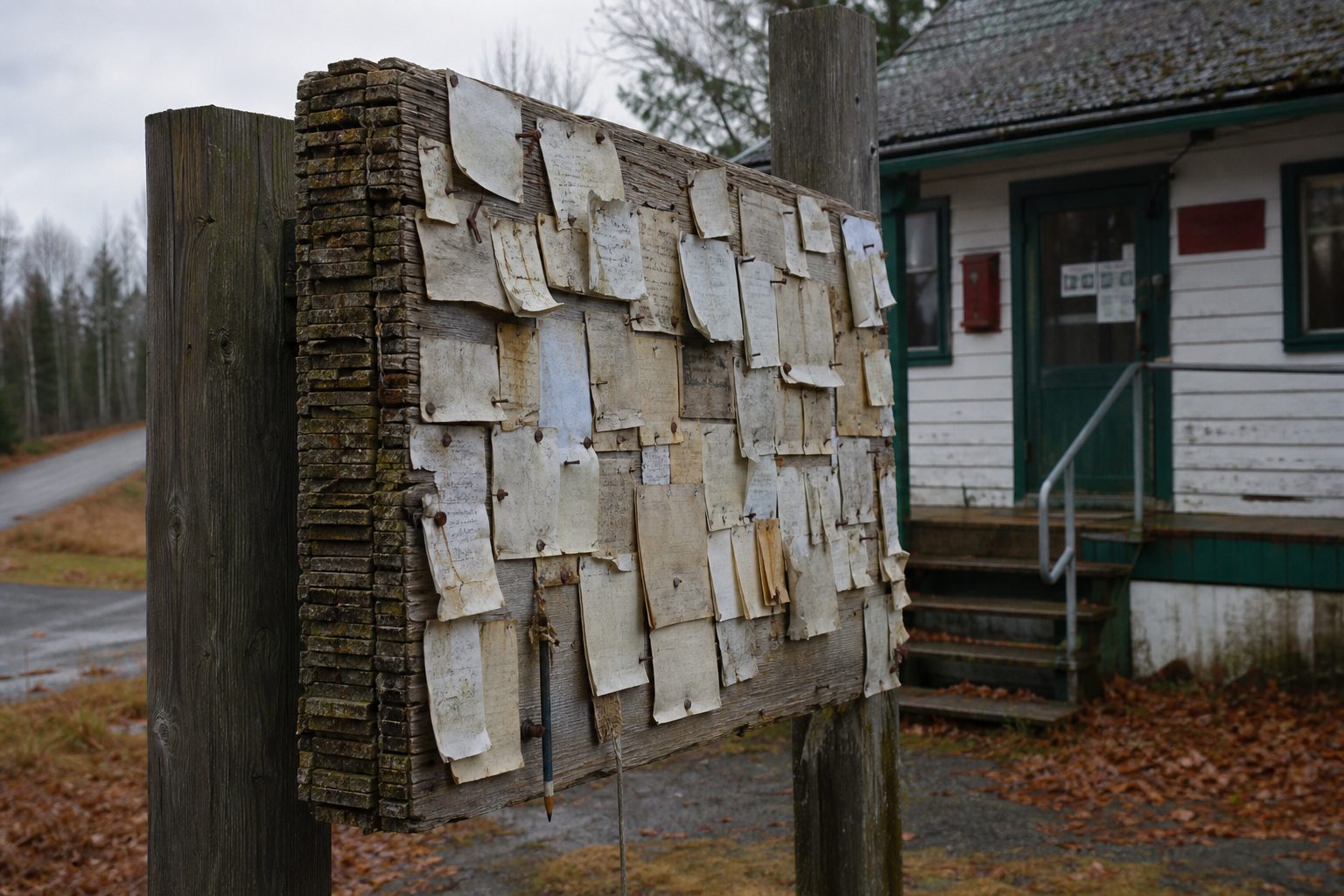
The Apology Board
A cedar board where anybody may nail up an apology, signed or not, deserved or not. The oldest legible one says only "the barn thing, I did it, 1974." Nothing is ever removed: when it fills, a new board goes over the top, and it is now eleven boards thick.
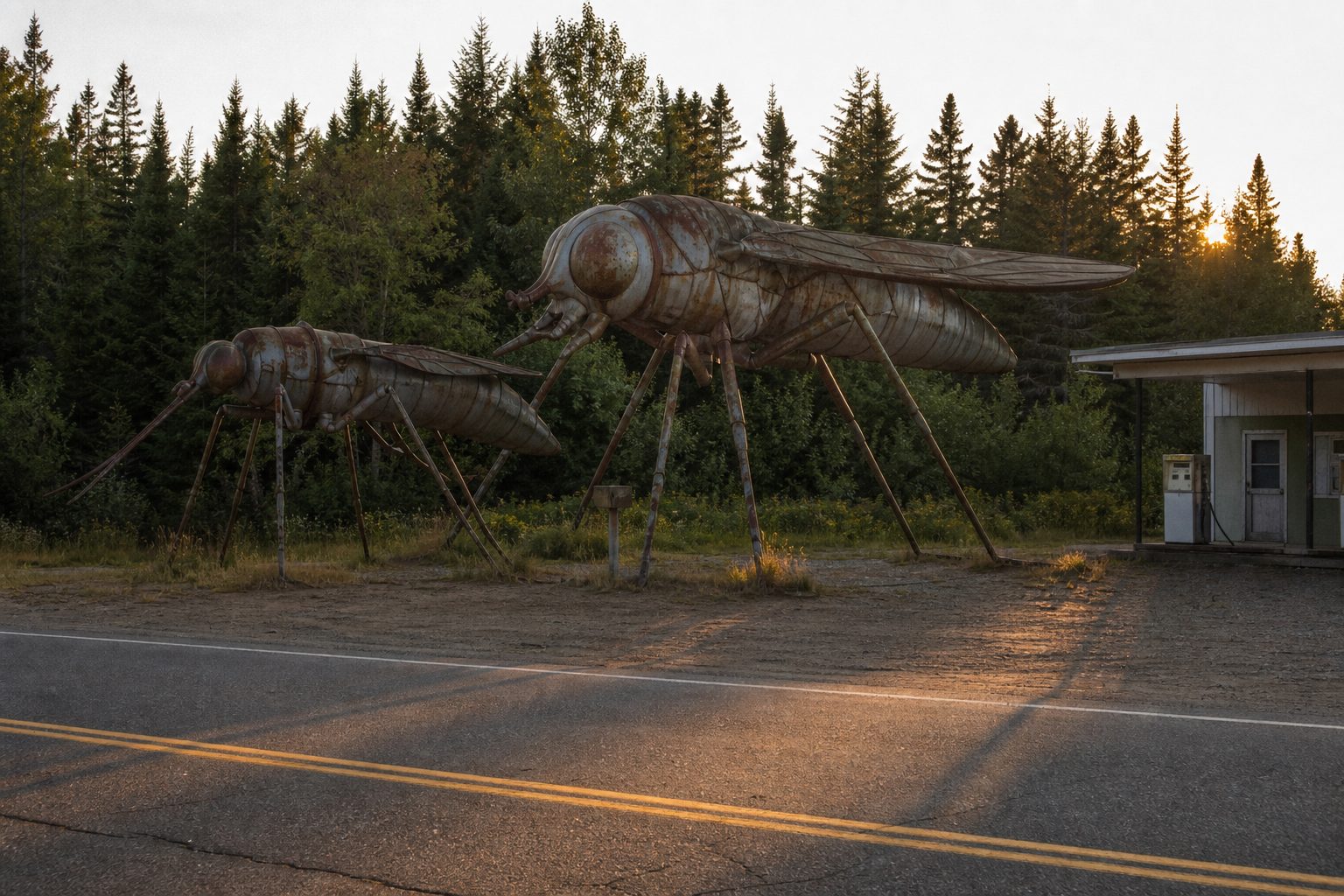
Half past five, late August. The shadow reaches the gas station, and the gas station closes early on purpose.
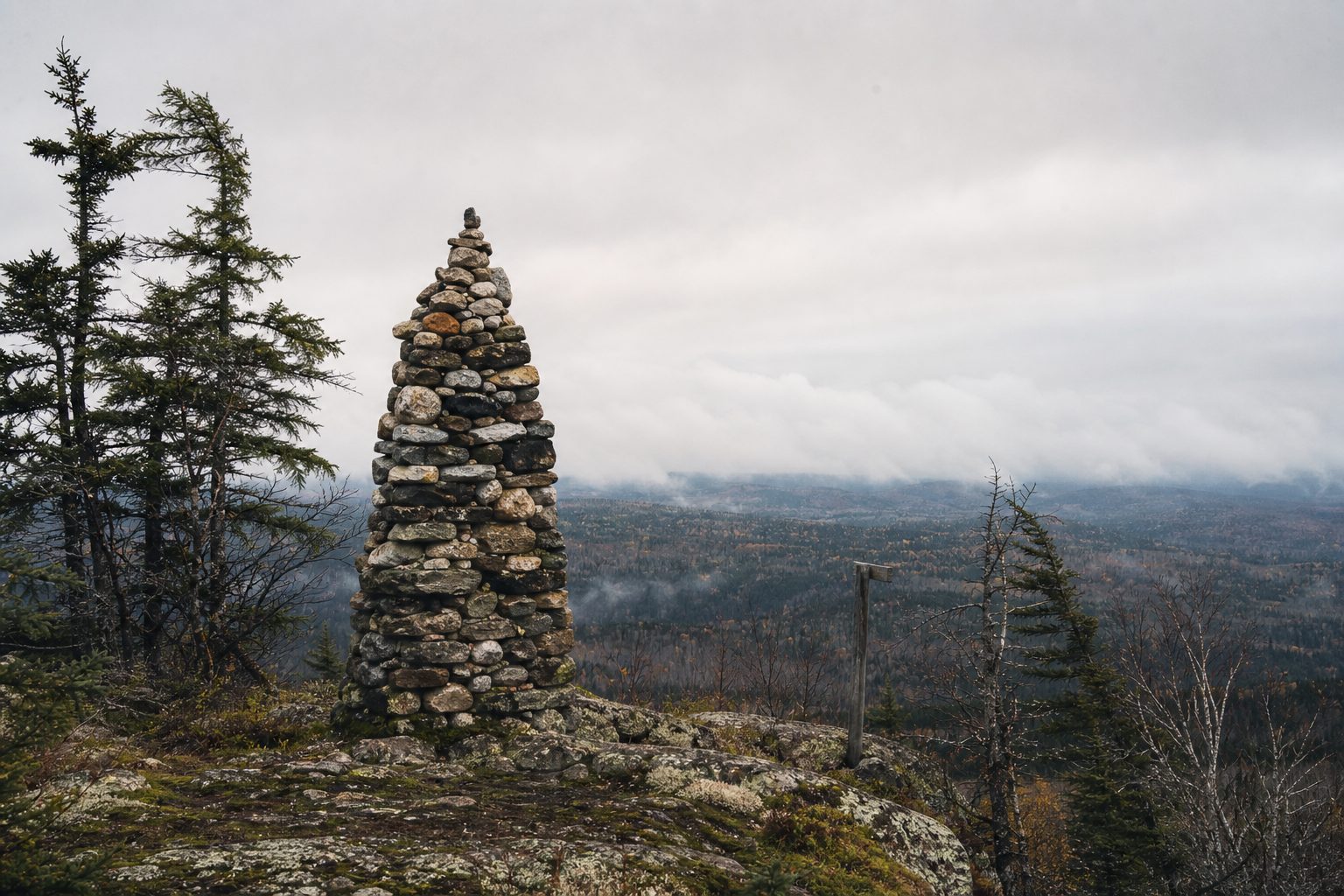
The Listening Cairn
A pile of stones Alphonse-Réal began in 1972 and adds six a year to. Assessed in 2006, it held stones from at least nine locations, three of which are not in Québec. The instruction to visitors: "You may add a stone if you have carried it more than a day."
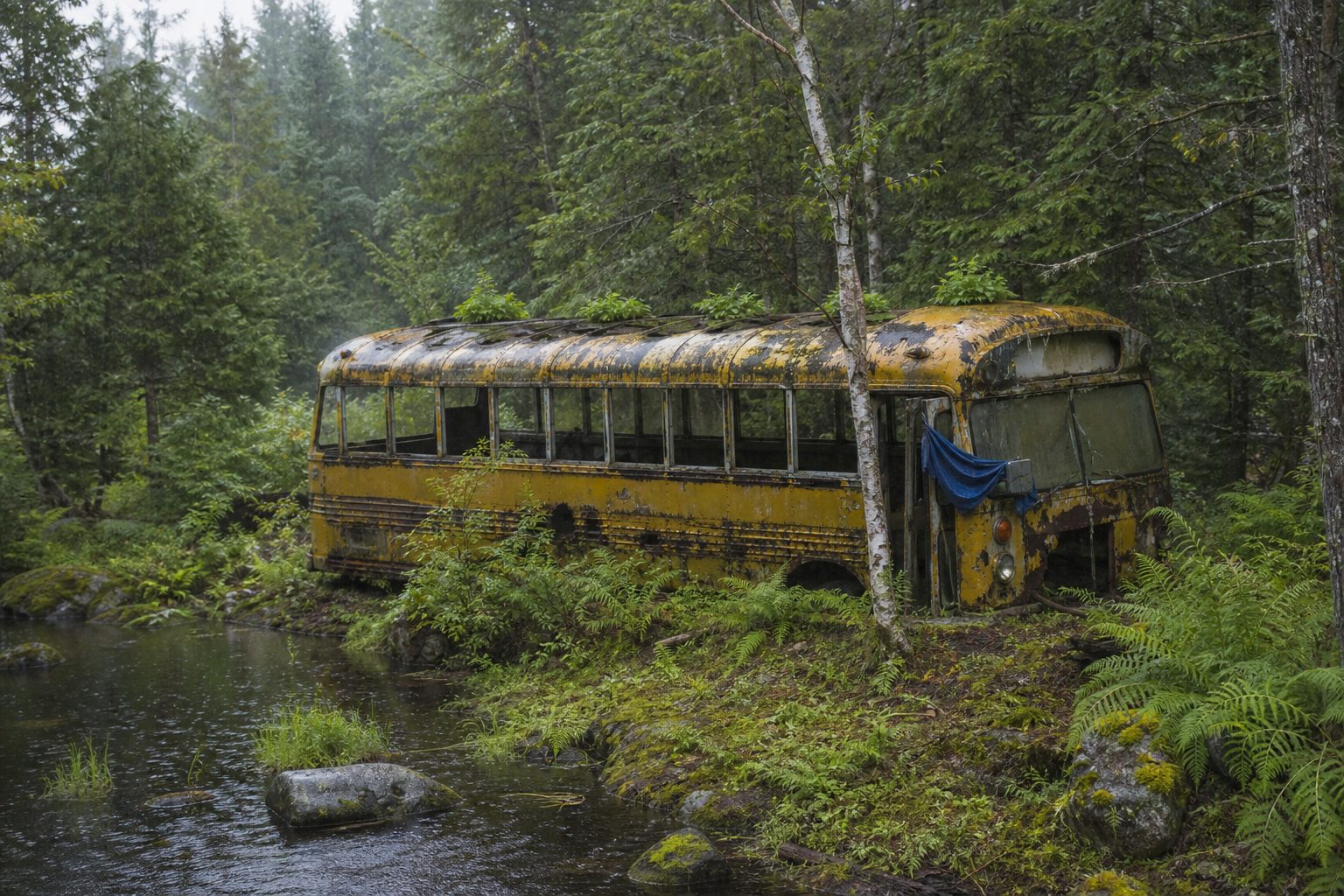
The Bus
The original 1961 school bus, sunk to the axles, growing tomatoes through the roof vents. You may sit in it: the fourth seat frame from the back is the good one. In 2011 a museum offered to restore it. The vote took nine minutes and was unanimous.